Tag guide · RN 81045
Ched
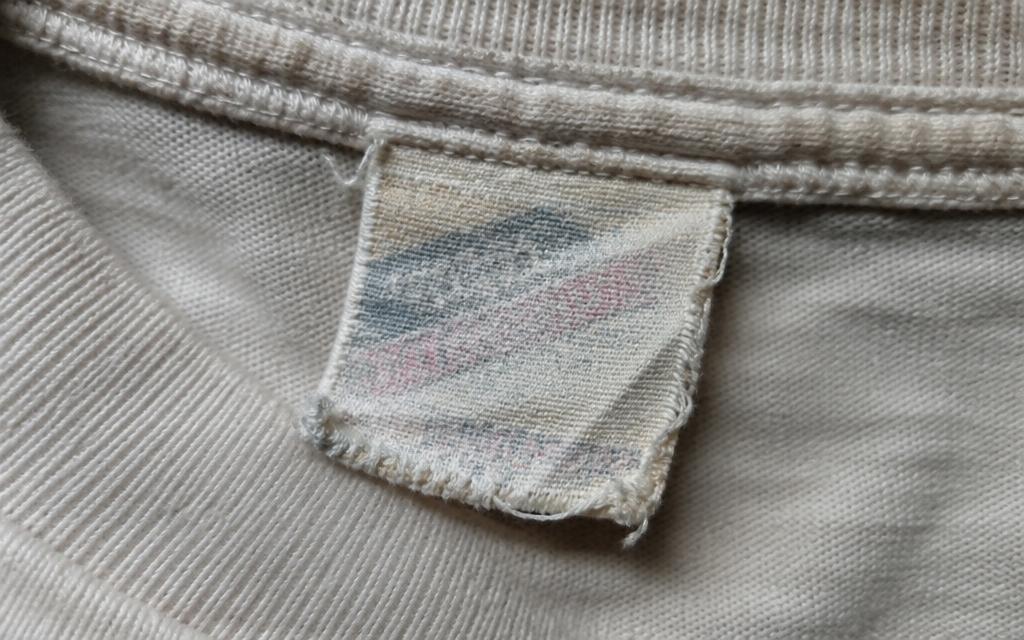
Ched tag history
Ched is best known among collectors for 90s motorsports and NASCAR shirts, especially dense, colorful, sponsor-heavy prints.
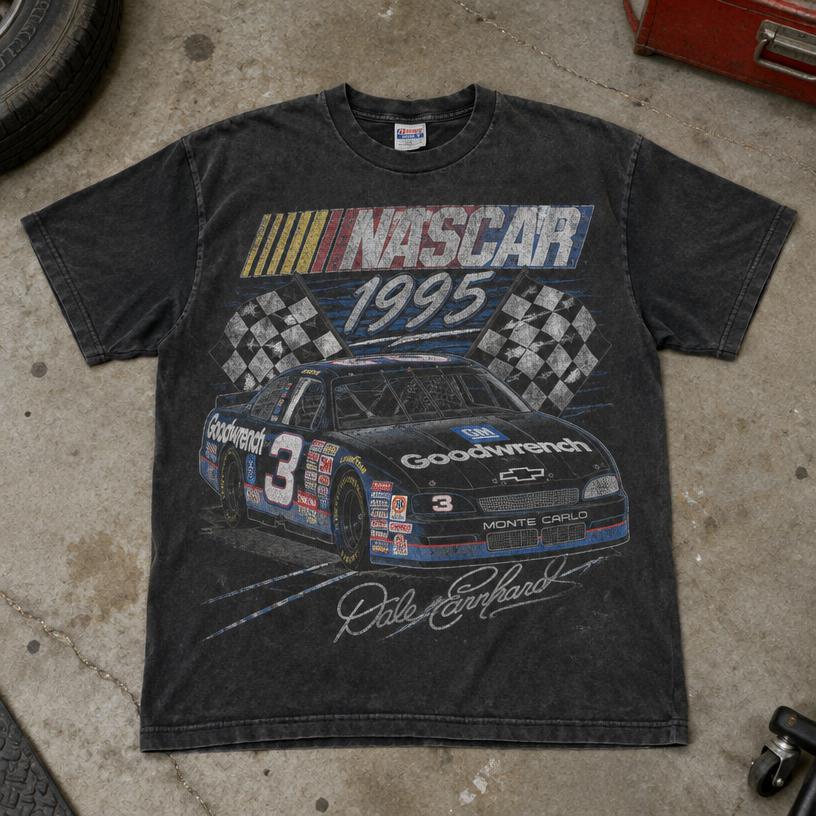
Racing tees from this era are collected for driver, sponsor and car number. The blank helps confirm age while the print sets value.
Because popular drivers are heavily reproduced, checking print method and sponsor accuracy is essential.
How to date a Ched tag by era
1990–1999
Ched tag, often paired with Chase Authentics or Winner's Circle prints.
Single stitch vs double stitch on Ched
Mixed; early 90s single stitch, later double.
Real signs
- Heavy screen print with era-correct sponsors
Red flags
- Sublimated digital all-over print
How to authenticate a Ched tee
Screen vs sublimation
Vintage racing tees are usually screen printed with thick ink. Modern all-over prints are often sublimated into the fabric.
Sponsor accuracy
Sponsors and car numbers should match the driver's real season.
Stitching
Early 90s shirts are more often single stitch; later ones double.
Licensing
Look for official licensing or copyright text on the print.
Archive tees on Ched blanks
What collectors should know about Ched
Ched is one of the lesser-documented blanks, which actually makes it attractive to collectors who like deep-cut tags.
Because reference material is limited, dating a Ched shirt usually relies on the overall evidence: stitching, fabric, copyright lines on the print and the tag's country of origin.
Treat any confident online claim about exact Ched dates with caution and look for multiple matching examples before relying on it.
Anatomy of a Ched tag: what to read, line by line
Front of the tag
On a Ched tag, start with the logo, font and colors. Compare letter spacing and ink tone against confirmed examples from the same era; modern reproductions often look too crisp, too bright or slightly off in proportion.
Size marking
Look at how the size is shown on the Ched tag: printed directly, on a separate size tab, or stamped. Era changes often show up first in small details like size placement.
Fabric content line
The fiber content line (for example 50/50, 100% cotton or tri-blend) should match how the shirt actually feels. A heavy, stiff shirt with a tag claiming paper-thin 50/50 is a mismatch worth questioning.
Country of origin
"Made in USA" lines are common on older Ched tags. Later shirts may say assembled elsewhere from U.S. components, or list a fully offshore origin. This one line often narrows the date range more than anything else.
RN number and care text
The RN number identifies the company responsible for the garment. Care instructions and symbols also changed over time; modern pictogram-heavy care labels on a supposedly early tee are a red flag.
How the tag is attached
Check the thread holding the tag. Original stitching should look as aged as the collar. Fresh, bright thread or extra needle holes suggest a tag was swapped or re-sewn.
Ched country of origin timeline
Late 1970s – 1980s
Most Ched shirts collectors encounter from this period are U.S.-made, often in thin 50/50 or soft cotton, with single-stitch sleeves and hems.
Early – mid 1990s
Fabric weights increase across the industry and 100% cotton becomes more common. Single stitch gradually gives way to double stitch around 1994–1996.
Late 1990s
Production shifts offshore across most U.S. apparel brands. Tags begin listing Mexico, Central America or other origins, and double stitch becomes the norm.
2000s and later
Any Ched tag produced in this era should be treated as modern for collecting purposes, even if the graphic references an older band, film or event.
Vintage Ched sizing: pit to pit and length
Vintage sizes run differently from modern ones and vary shirt to shirt. These are typical ranges collectors report; always ask for real measurements before buying.
| Tag size | Pit to pit | Length |
|---|---|---|
| Small (vintage) | 17–18 in | 25–26 in |
| Medium (vintage) | 19–20 in | 26–27 in |
| Large (vintage) | 20–21.5 in | 27–28 in |
| XL (vintage) | 22–23.5 in | 28–30 in |
| XXL (vintage) | 24–26 in | 29–31 in |
Shirts commonly found on Ched blanks
- Regional band and event tees
- Souvenir shirts
- Sports prints
- Promotional shirts
How Ched fakes and reprints are made
Reproduced tags on modern blanks
Some sellers attach printed copies of a Ched tag to new shirts. The giveaway is usually the blank itself: modern double-stitched hems, tubular vs side-seam construction mismatches, and fabric that feels too uniform.
Swapped tags
A genuine old tag can be cut from a cheap shirt and sewn into a reprint. Look for extra needle holes in the collar, mismatched thread color, and tags that are noticeably cleaner or dirtier than the collar around them.
Artificial aging
Sanding, bleaching and heavy washing can fake fade. Real age wears unevenly: collars, cuffs, armpits and print edges fade first, while protected areas stay darker.
Too-perfect prints
Digitally printed or freshly screen-printed reproductions often have flat, plastic-feeling ink with no cracking. Vintage plastisol and water-based prints show cracking, softening and fading that follows the fabric's wear.
Buying a Ched tee online: checklist
- Ask the seller for clear photos of both sides of the Ched tag, the sleeve hem, bottom hem and any copyright line on the print.
- Request pit-to-pit and length measurements in inches; vintage tag sizes run differently from modern sizing.
- Check for holes, stains and dry rot by asking for photos in natural light, held up to a window.
- Compare the listing against several confirmed examples, not just one reference photo.
- Be extra careful with high-value graphics: the more valuable a shirt is, the more likely it has been reproduced.
Ched tag FAQ
What makes a Ched racing tee desirable?
Driver, sponsor, and print density — Earnhardt Goodwrench is the benchmark.
How can I date a NASCAR shirt?
Match the sponsors, car number and team to the driver's season, then confirm the blank and print method.
Does a Ched tag prove a shirt is vintage?
No. Tags can be cut from old shirts and sewn into new ones. Confirm the tag agrees with the stitching, fabric weight, print method and wear before trusting it.
How much is a vintage Ched tee worth?
The blank rarely sets the price. The graphic, band or subject, size, condition and whether it is single stitch drive value. The Ched tag mainly helps confirm age.
How do I fit a vintage Ched shirt?
Ignore the size on the tag and measure pit to pit and length. Decades of washing shrink and twist old cotton, so a tagged XL often fits like a modern medium or large.