Authentication guide
Single stitch & spotting real vintage
- 1
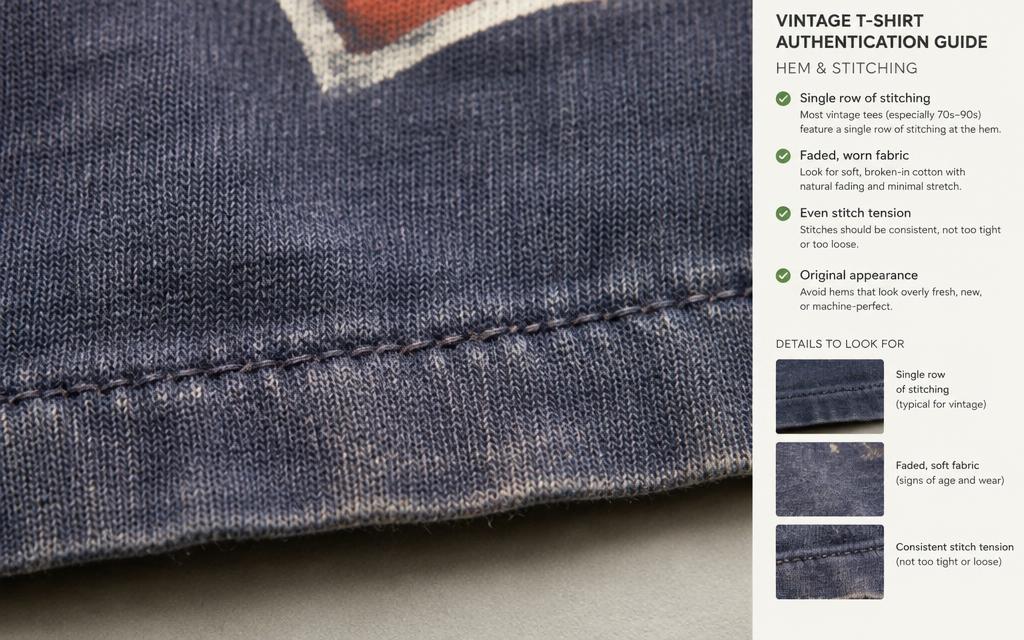
Check the sleeve and hem stitching
Single stitch means one row of thread on the sleeve cuff and bottom hem. Most US tees before ~1995 are single stitch; double stitch became standard after.
- 2
Read the collar tag
Match the tag design, RN number and country of origin to the brand's known eras in our tag directory. Reproduction tags look too crisp and bright.
- 3
Look for dry rot
Gently stretch the collar and armpits. Dry rot shows as brittle fibers that tear or crack — common in stored 50/50 tees. It kills value, so check before you buy.
- 4
Read the fade
Natural fade is uneven: shoulders, collar and folds go first. Acid-washed or artificially distressed modern tees fade uniformly.
- 5
Inspect the print
Vintage plastisol cracks in fine webs and sits slightly raised. Look for a copyright line and year near the graphic on licensed merch.
- 6
Measure
Vintage sizing runs smaller and shorter. Measure pit-to-pit and length — a vintage XL often fits like a modern L.
FAQ
Does single stitch always mean vintage?
No. Some modern brands reproduce single stitch. Combine stitching with tag, fabric and print evidence.
What is dry rot on a T-shirt?
Fiber degradation from age, heat and storage that makes fabric brittle and prone to tearing.
When did shirts switch from single to double stitch?
Most US manufacturers transitioned between 1993 and 1996.