Est. for the thrift-rack obsessed
Every tag tells a story. Catalog yours.
Date blanks in seconds, spot fakes, track the grails everyone's hunting, and build a trophy case for your vintage tee stash.
- Archive tees
- 20
- In stashes
- 0
- ISO requests
- 0
Tag decoder
What's on your collar?
1979–1984
Blue-and-white tag with star logo, often 50/50 or 100% cotton, made in USA.
1985–1989
"Screen Stars Best" multicolor tag; 50/50 dominates. Peak tour-tee era.
1990–1993
Tag simplifies; Fruit of the Loom branding appears; still mostly single stitch.
RN 15763 — Almost always single stitch on sleeves and hem through 1993.
Item of the Day · resets at UTC midnight
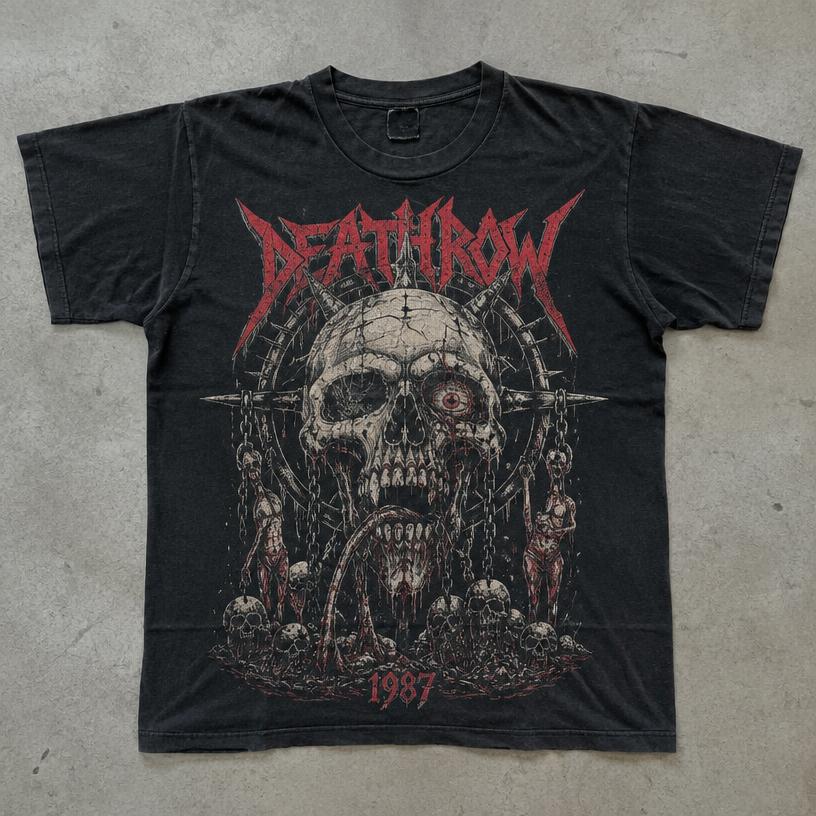
Metallica Pushead Skull
Pushead artwork, Brockum era tour merch with full back print.
See the full entry →Featured grails
Price guide →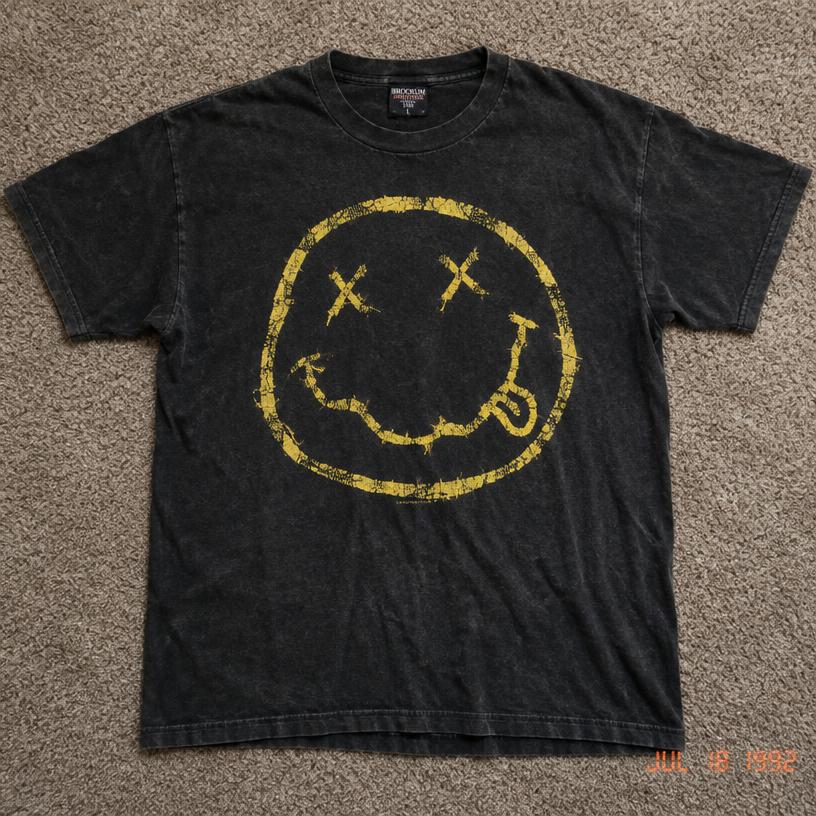
Nirvana Smiley "Flower Sniffin"
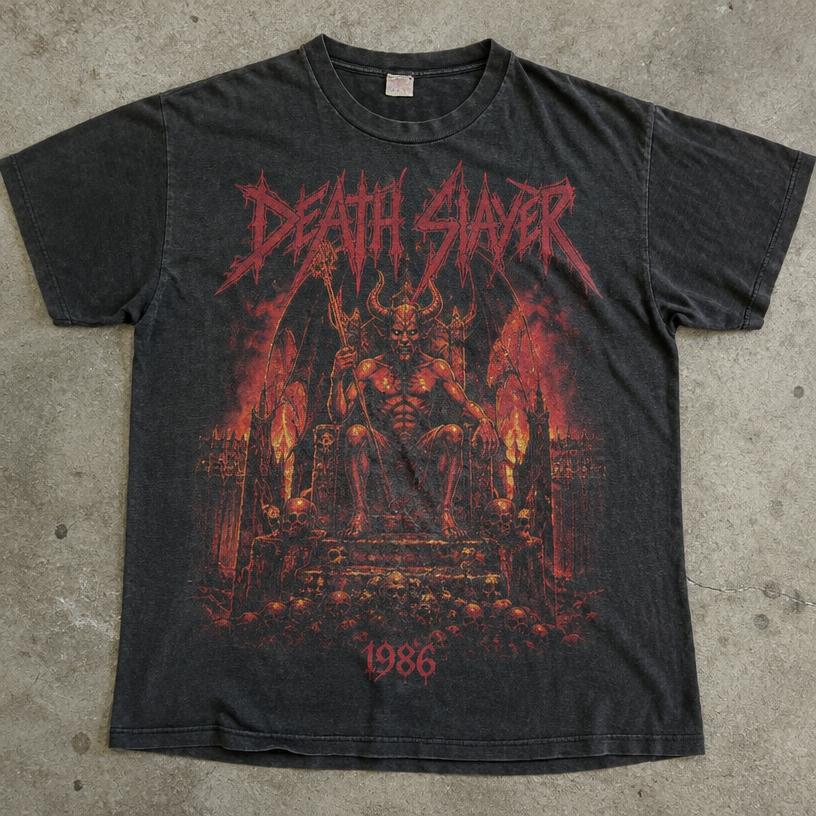
Slayer Reign In Blood
Metallica Pushead Skull
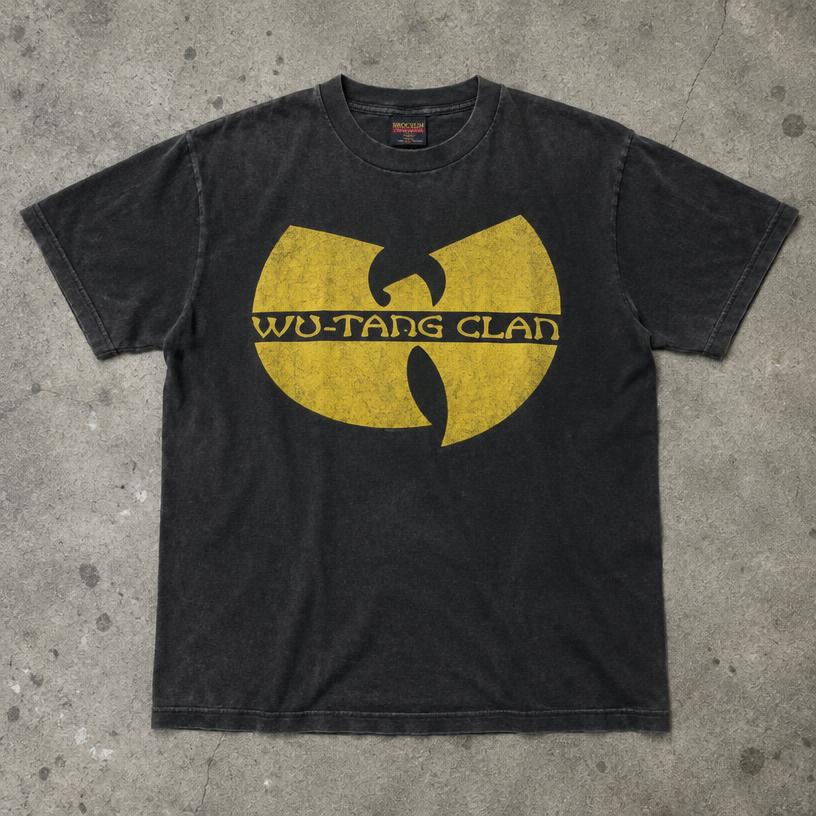
Wu-Tang Clan 36 Chambers
Anatomy of a vintage T-shirt
Six places to check before you pay for a vintage tee, whether you're in a thrift aisle or reading an online listing.
01
Collar tag
Brand, RN number, fiber content and country of manufacture. Your first clue to the era.
02
Collar ribbing
Check for stretch-back and fresh stitching around the tag that could signal a swap.
03
Vintage screen prints sit on the fabric and crack in fine webs. Look for a copyright line.
04
Sleeve and hem
Single stitch was common before the mid-90s; double stitch afterwards.
05
Fabric
Thin 50/50 blends for many 80s shirts; heavy 100% cotton for many 90s blanks.
06
Wear pattern
Real aging hits the collar, shoulders, armpits and folds first.
Collector showcase
All collectors →The vintage T-shirt collector's primer
What makes a T-shirt "vintage"?
In the collector market, a vintage tee usually means a shirt at least 20 years old, with most attention on shirts made between the 1970s and the late 1990s. Age alone isn't enough: collectors care about whether a shirt was produced during its original era, on a period blank, with an original print. A modern reprint of an 80s design is not vintage, even if it looks old.
Why the blank matters
The blank is the underlying shirt a design was printed on, identified by its collar tag. Screen Stars, Giant, Brockum, Oneita, Hanes and others each had distinct tag designs that changed over time. Because tags evolved, a tag can narrow down when a shirt was made, which is the foundation of authentication. Our tag dating directory walks through those changes brand by brand.
The single stitch era
Through most of the 70s, 80s and early 90s, many tees were sewn with a single row of stitching on the sleeve and bottom hems. Around the mid-90s, manufacturers broadly switched to double stitch. Single stitch is a helpful clue, not proof: some brands made single stitch later, and reproduction makers sometimes copy it.
How condition affects value
Fading, cracking and softness are often welcome signs of honest age. Holes, stains, dry rot and pit stains lower value, though iconic grails can still command strong prices in rough shape. Deadstock (unworn, original) shirts sit at the top of the market.
Why collectors catalog their stash
A well-documented collection makes insurance, reselling and authentication easier. Recording the tag, stitch, measurements, condition and story of each piece builds a personal archive and helps the community learn what's real.
Vintage tee glossary
- Single stitch
- One row of stitching on the sleeve or hem; common on pre-mid-90s tees.
- Double stitch
- Two parallel rows of stitching; standard on most shirts from the late 90s onward.
- Blank
- The plain shirt a design is printed on, identified by its tag.
- Deadstock
- Original, unworn, never-washed vintage, sometimes with retail tags.
- Dry rot
- Fabric breakdown from age, heat or storage that makes cotton tear easily.
- 50/50
- A cotton-polyester blend, famous for thin, soft drape on 80s tees.
- Paper thin
- Very worn, lightweight fabric, often 50/50, prized for its feel.
- Tour back
- Tour dates printed on the back of a concert shirt.
- Bootleg
- An unlicensed shirt, sometimes collectible in its own right.
- Reprint
- A newer shirt reproducing an older design, licensed or not.
- RN number
- A registration number identifying the company responsible for a garment.
- Pit to pit
- Chest measurement across the shirt from armpit seam to armpit seam.
- AOP
- All-over print: a design covering most of the shirt.
- Grail
- A collector's most wanted, hardest-to-find piece.
- Crack
- Natural fractures in aged screen print ink.
- Promo
- A shirt made to promote a release, often not sold at retail.
Vintage T-shirt questions, answered
- How can I tell if a T-shirt is vintage?
- Check the tag style, single stitch hems, fabric blend, print cracking and copyright line. When all of them agree on an era, you can be more confident.
- What does single stitch mean on a vintage tee?
- A single row of stitching on the sleeves and hem. It was common before the mid-90s and is a useful clue for age, though modern brands copy it.
- How do I date a T-shirt tag?
- Match the brand, tag design, RN number and country of manufacture against our tag dating directory.
- How much is my vintage T-shirt worth?
- Value depends on the subject, rarity, age, size and condition. Use our price guide to compare similar archive tees.
- How do I spot a fake vintage tee?
- Look for mismatches: a modern blank with an old tag, digital printing, artificial distressing or wrong copyright years.
- Is FadedStash free?
- Yes, building your stash and trophy case is free.